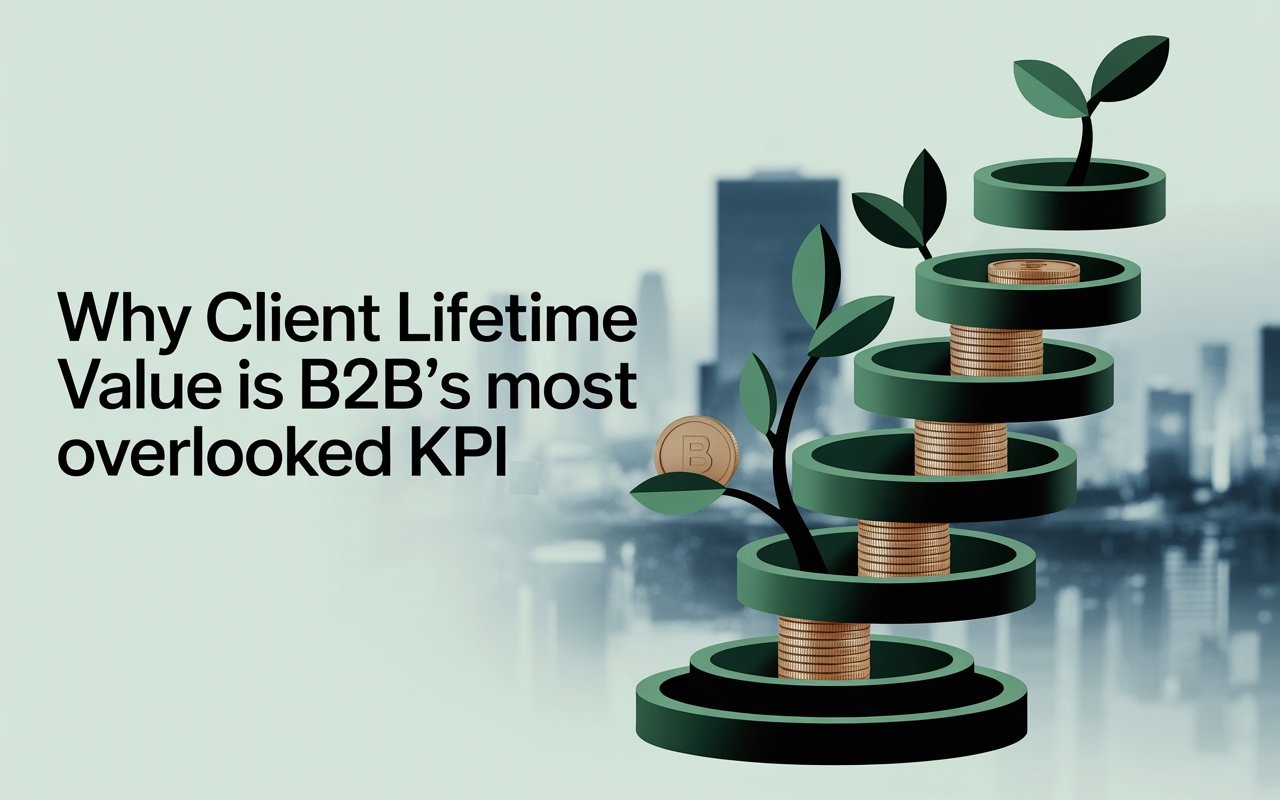
Businesses often pour their energy into getting new customers, spending time and money on ads, outreach, and sales efforts. But while bringing in new clients is crucial, one important measure often gets less attention than it deserves: Client Lifetime Value in B2B. This single number can give insights into how much revenue a company can expect from a client over the entire span of their relationship.
Many B2B companies look at short-term wins, like quarterly sales numbers or lead counts. But if you want steady growth, you need to think beyond the first sale. Knowing your client lifetime value helps you decide how much to invest in keeping clients happy, how to shape your services, and how to spot the most valuable customers who help your business thrive.
Why Client Lifetime Value Matters in B2B
Measuring client lifetime value in B2B is not just about knowing a figure. It’s about making smart choices that affect profits, strategy, and customer relationships. Unlike one-time buyers, B2B clients often buy in cycles, renew services, or expand contracts over time. Each of these actions adds to the client’s total value to your company.
Companies that track B2B customer lifetime value can better plan their budgets. They know which clients bring the highest returns and which might be costing them more than they realize. This helps avoid wasting money on clients who may churn quickly or demand high service costs without long-term value.
The True Impact on B2B KPIs
Many firms track obvious B2B KPIs like monthly sales, website traffic, or number of leads. But customer lifetime value strategy gives context to those numbers. For instance, a client may make a small initial purchase but grow into a high-value customer over time.
Knowing your B2B client value also changes how you see costs like customer support or loyalty programs. Instead of thinking of these as expenses, you’ll start seeing them as investments in growing your long-term B2B relationships.
This is why understanding lifetime value ranks among the top key performance indicators for B2B success.
How to Calculate Client Lifetime Value in B2B?
Calculating client lifetime value in B2B is a bit more involved than in B2C businesses, because B2B relationships are more complex. Still, the basic idea is:
Client Lifetime Value = Average Purchase Value × Purchase Frequency × Average Client Lifespan
Let’s say your average client spends $2,000 per month, stays with you for 3 years, and buys from you every month. The calculation would be:
$2,000 x 12 months x 3 years = $72,000
This means one client could bring $72,000 in revenue during the partnership.
Of course, you’ll also want to consider costs. Subtract your average cost to acquire B2B clients and any ongoing costs to serve them, like support or account management. That way, you see the true profit from the relationship, not just the revenue.
Ways to Increase Client Lifetime Value
Knowing your B2B customer lifetime value is useful, but the real power comes from improving it. Here are ways you can boost this key metric:
Focus on Client Retention
It’s cheaper to keep existing clients than to find new ones. Build trust by keeping promises, offering great service, and staying connected. Regular check-ins and personalized support can help you spot small problems before they become reasons for churn.
Offer More Value Over Time
Consider upselling or cross-selling services that genuinely help your clients. For instance, if you provide a SaaS tool, you could offer premium features that save clients time or improve their results. This adds value and increases how much clients spend over time.
Understand High-Value Clients
Study which clients bring you the most profit. Are there certain industries, company sizes, or regions where your services shine? Knowing your high-value B2B customers lets you focus marketing and sales efforts where they’ll have the biggest impact.
The Connection Between CLV and Other B2B Success Metrics
Your customer lifetime value strategy ties directly to other important measures like churn rates, marketing ROI, and overall revenue. A low CLV could hint at issues like poor product fit, weak customer service, or gaps in your B2B marketing ROI metrics.
By improving client lifetime value in B2B, you’re not just adding revenue. You’re building stronger, longer relationships. You’re reducing the cost of constant client churn. And you’re creating a stable base of customers who trust your business.
Conclusion: Don’t Ignore This Powerful Metric
While it’s easy to focus on getting new clients, the hidden power lies in knowing how much each client is worth over time. Tracking and improving your client lifetime value in B2B helps you make smarter decisions, serve clients better, and build lasting success.
Look beyond short-term wins and invest in the clients who will stand by your business for years. It’s one of the smartest moves any B2B company can make.
Want to see how loyalty rewards can grow your referrals?